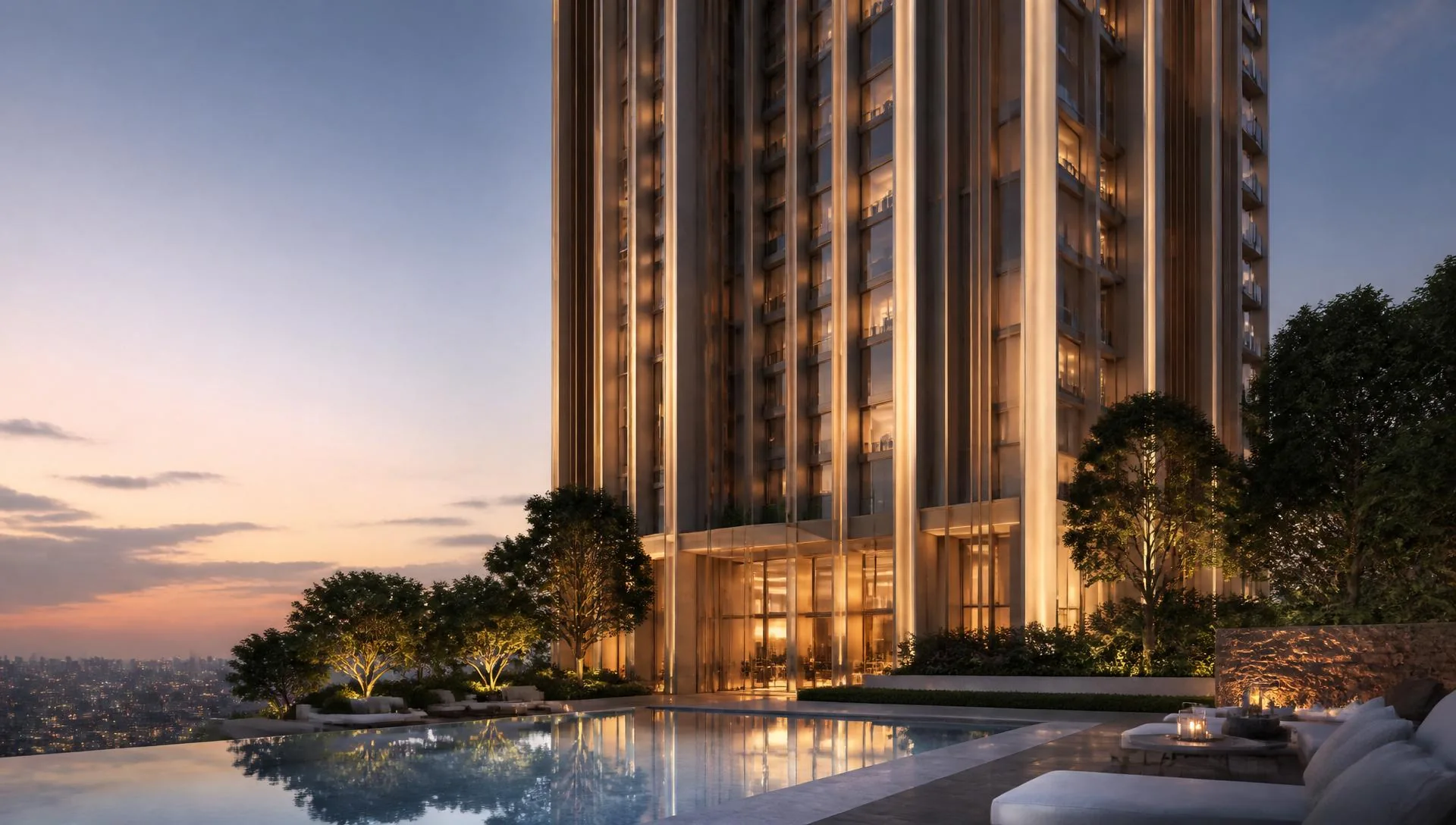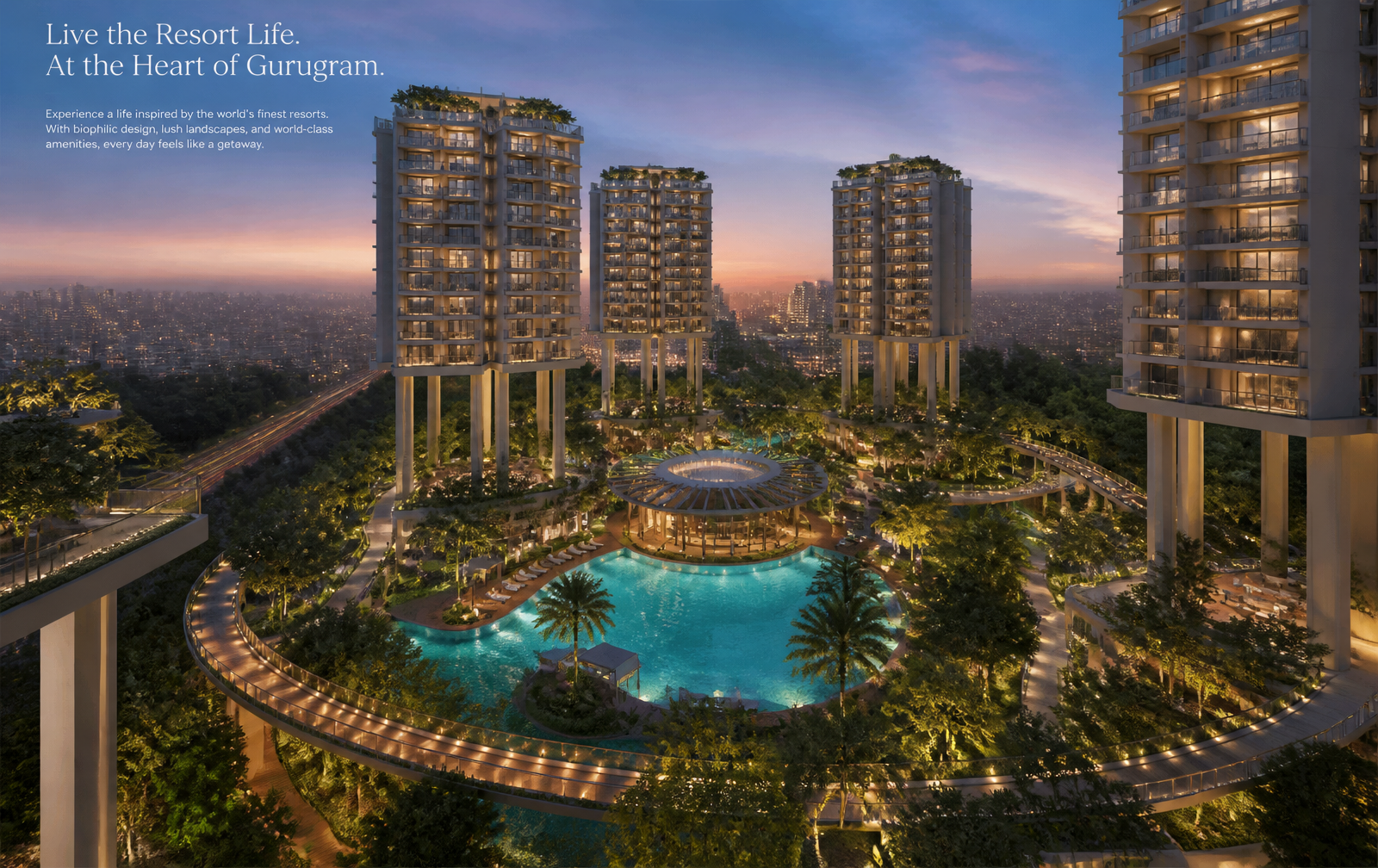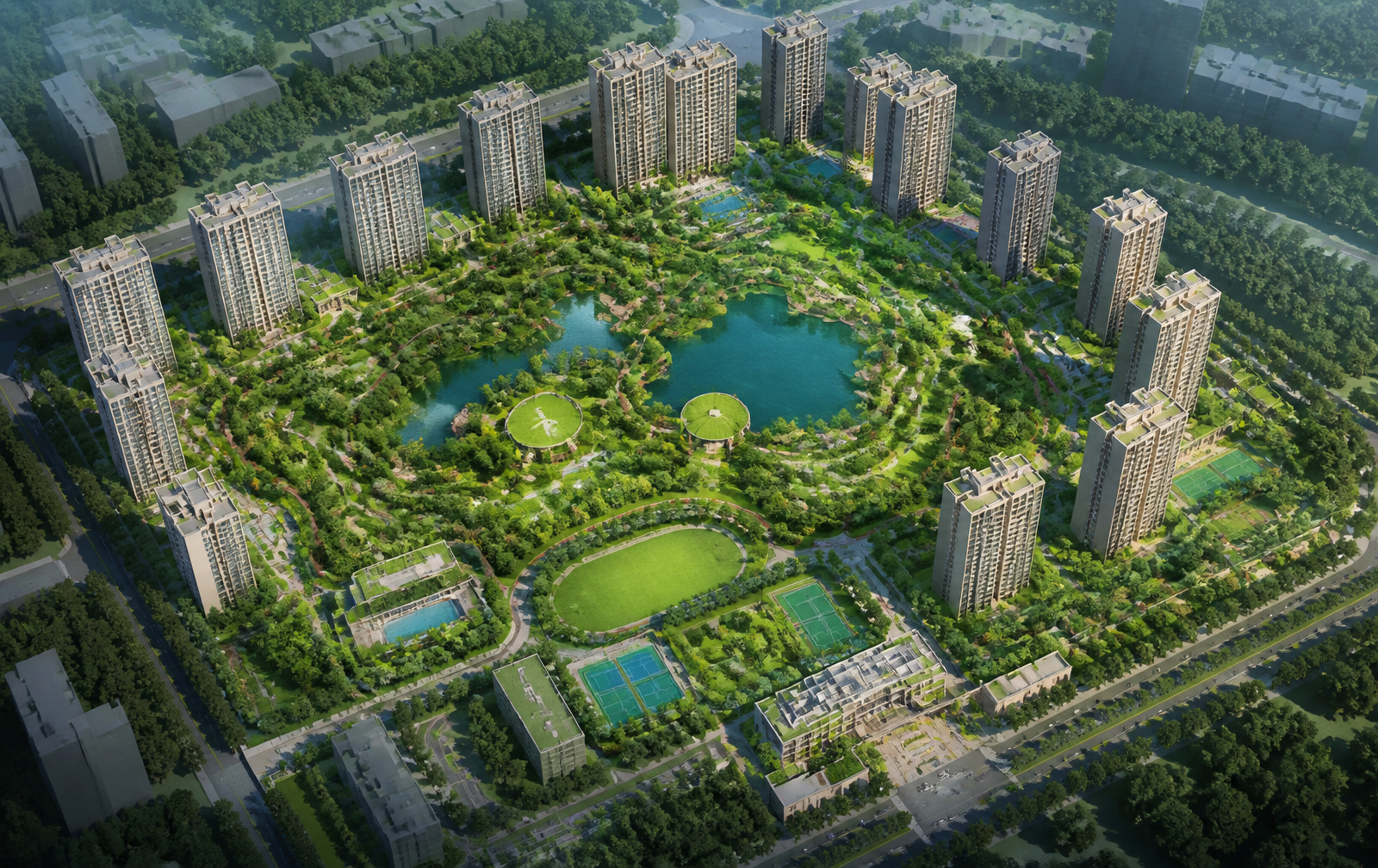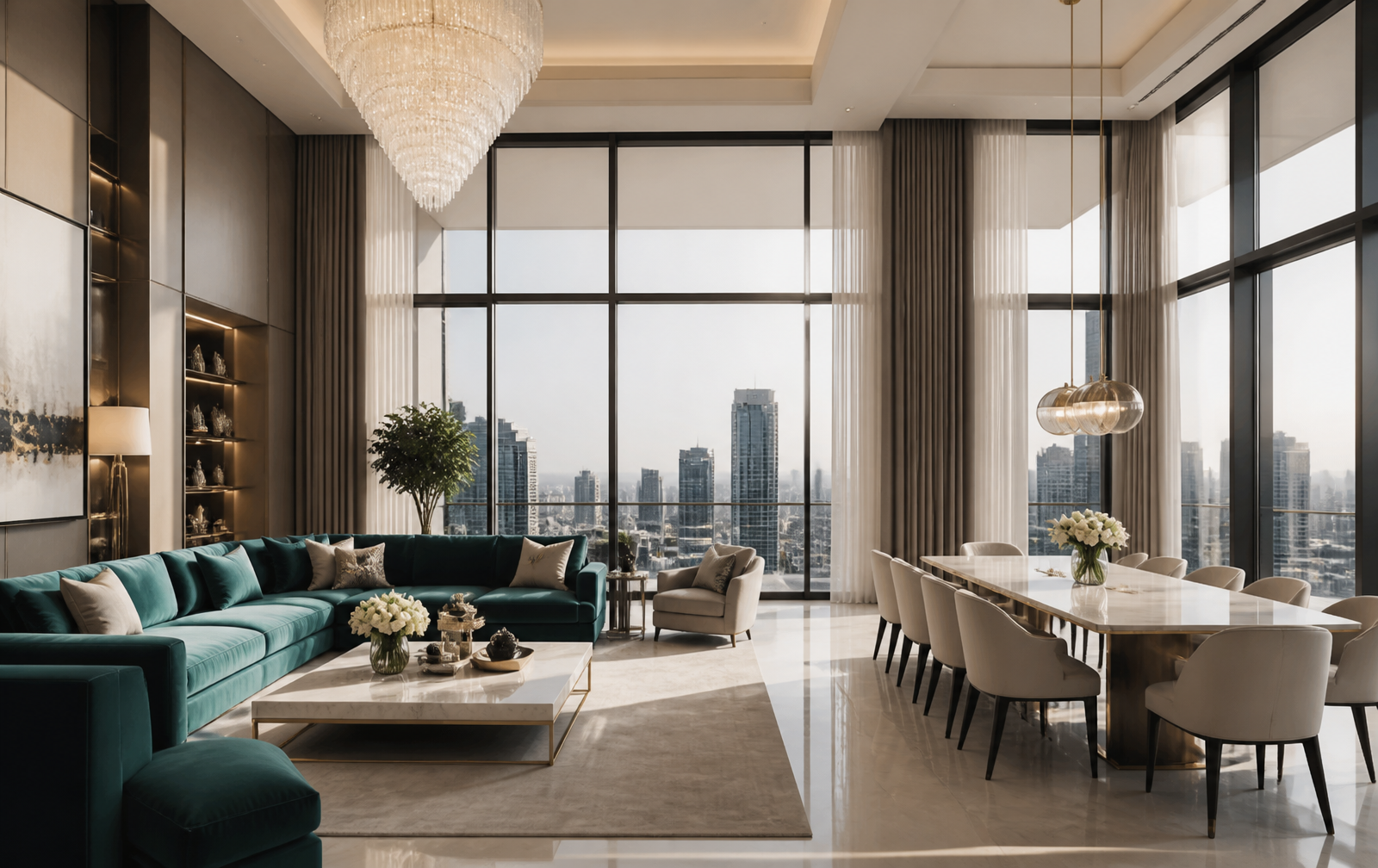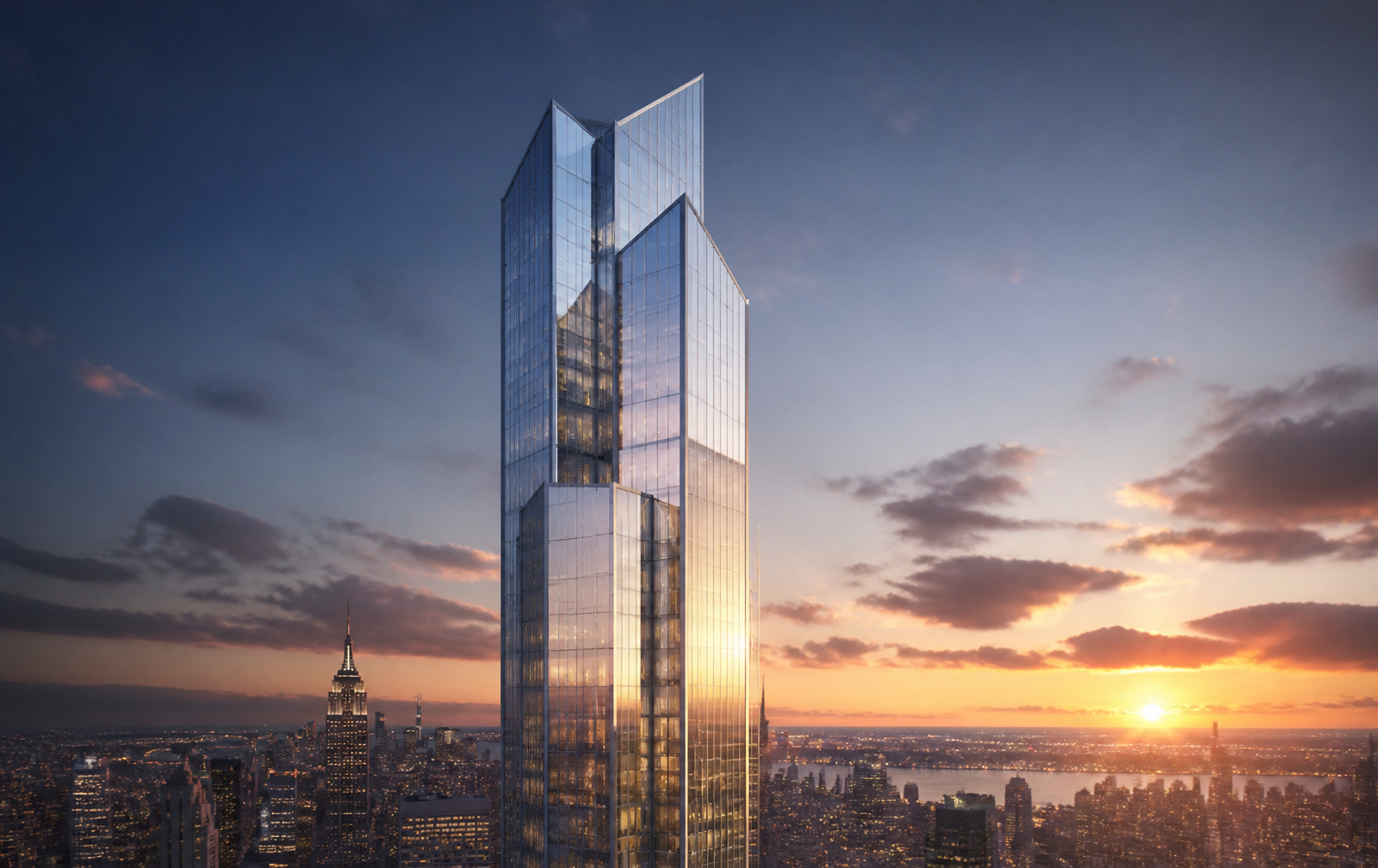
On the show-flat floor, a top-tier luxury apartment and a branded residence can look almost identical — same imported stone, same ten-foot ceilings, same view of the golf course. The difference is not what you see on handover day. It is what you can rely on five, ten and twenty years later. This guide is written for buyers who can afford either option in Delhi NCR and want an honest answer to a simple question: what does the branded premium actually buy, and when is a very good luxury apartment the smarter choice?
§Two products, two contracts
The difference is not architecture, finish or amenity mix — those can be matched. The difference is contract length, accountability and enforceability. A luxury apartment is governed by the developer for two to five years and by an owners' association after that. A branded residence is governed by an operating agreement that typically runs 20 to 30 years, backed by a brand whose global reputation depends on holding the line.
§Side-by-side: where the two products actually differ
| Dimension | Branded residence | Luxury apartment |
|---|---|---|
| Service accountability | Named operator, contractually enforceable for the term | Residents' association via appointed facility manager |
| Service consistency | Standardised to brand SOPs; audited by the operator | Depends on FM vendor and RWA discipline; drifts over time |
| Staff quality | Trained to the brand's global standard; often rotated with hotel | Local hires; training is vendor-dependent |
| Design and finish | Curated by brand's design team; specifications enforced | Curated by developer; can equal or exceed in ultra-luxury |
| Amenity depth | Wellness, F&B, concierge at hotel-grade | Excellent hardware; softer on service programming |
| Governance | Operating agreement + buyer-developer agreement; brand-audited | Sale deed + society bye-laws; self-governed |
| Service charges | 20–45% higher than a comparable luxury apartment | Lower base, but scope often narrower |
| Resale narrative | 'A residence at [Brand]' — global buyers understand it | 'A large apartment in [complex]' — requires local familiarity |
| Rental yield (short-let where allowed) | Higher achievable rate; brand booking channels help | Lower achievable rate; owner-managed |
| Price volatility in downturns | Historically lower than luxury apartments in same corridor | Higher; correlates more tightly with the broader market |
| Resident flexibility (renovation, subletting) | Restricted by brand standards | Broader, subject only to society rules |
| Time to deliver | Longer — brand approvals, mock-ups, snagging | Shorter — developer controls the timeline |
§What the brand actually does (and does not)
A common misunderstanding in Delhi NCR is that the brand builds the residence. It does not. In almost every hospitality-operator scheme worldwide, the developer builds and sells; the brand licenses its name and operates the services. That split has three practical implications for a buyer.
- The brand sets and enforces service standards — front desk, concierge, housekeeping, security, F&B, wellness — under an operating agreement. This is the core value.
- The brand approves design and specification. Mock-up units are built and signed off before series production. This is why finish consistency is higher than a typical luxury apartment.
- The brand does not guarantee construction quality or delivery timelines. That is the developer's obligation, evidenced by delivery record and RERA filings.
In developer-branded schemes such as Oberoi Realty's Three Sixty North, the developer plays both roles: it builds and it stands behind the operating standard. That model works when the developer has a genuine brand of its own — as Oberoi does in Mumbai — and demonstrably less well when it does not.
§The price premium: what you pay, and what you get
Global benchmarks published by Knight Frank and Savills over the last five years put the branded premium at roughly 30% on average versus a comparable non-branded luxury residence, with a range of 15% to 60% depending on brand strength, location and product cycle. Delhi NCR pricing over 2023–2026 shows a similar band, typically 25–45% for a strong operator in an established corridor.
That premium is not a single line item. It buys four things bundled together: (1) the operating guarantee, (2) tighter design and specification control, (3) a resale narrative that travels globally, and (4) an option value — the right to short-let or use hotel privileges where the agreement allows. Buyers who only value one or two of these often overpay. Buyers who value all four typically underpay relative to what they get.
§Service charges: the recurring cost of consistency
The most under-modelled part of a luxury purchase is the annual outgoing. In a branded scheme, service charges typically run ₹18–35 per sq ft per month depending on staffing model, hotel integration and amenity footprint. In a top luxury apartment, the same number is usually ₹10–20 per sq ft. On a 6,000 sq ft residence held for ten years, the difference is meaningful — but so is what it delivers.
| Product | Monthly rate | Year 1 total | 10-year total (approx.) |
|---|---|---|---|
| Top-tier luxury apartment (Golf Course Road) | ₹15 / sq ft | ₹10.8 lakh | ₹1.4 crore |
| Branded residence — strong operator | ₹28 / sq ft | ₹20.2 lakh | ₹2.7 crore |
| Delta | +₹13 / sq ft | +₹9.4 lakh / yr | +₹1.3 crore over 10 yrs |
§Resale: the point most buyers underweight
The strongest financial argument for a branded residence over a luxury apartment is not appreciation — it is liquidity and downside protection. In every documented downturn since 2010 (2013–15 Mumbai, 2016–17 post-demonetisation Delhi NCR, 2020 COVID shock), branded schemes in mature markets have traded within a tighter price band than comparable non-branded luxury stock in the same micro-market. The reason is buyer composition: branded stock attracts a global buyer pool that does not disappear when local sentiment weakens.
- +Faster resale in a soft market — measured in weeks, not quarters
- +Recognisable to NRI and international buyers without local diligence
- +Rental floor supported by short-let / hotel programme (where permitted)
- +Service standard survives owner turnover — future buyers underwrite it
- –Ceiling on appreciation once the premium is baked into entry price
- –Higher recurring cost dampens net yield if not short-let
- –Renovation and personalisation restricted by brand standards
- –Weaker case if the operating agreement lapses without renewal
§The Delhi NCR reality: three archetypes, not two
In practice, Delhi NCR buyers are not choosing between 'branded' and 'luxury apartment' in the abstract. They are choosing between three specific archetypes:
- Established luxury apartment on Golf Course Road (DLF Camellias, Magnolias, Aralias) — mature address, deep secondary market, no formal operator layer.
- Ultra-luxury branded residence in the same or adjacent corridor (Three Sixty North, Trump, Tonino Lamborghini) — newer, operator-run, premium priced.
- Emerging-corridor branded launch (Dwarka Expressway, SPR, Sector 111) — brand-led premium at pre-appreciation land pricing.
| Metric | Established luxury apt | Ultra-luxury branded | Emerging-corridor branded |
|---|---|---|---|
| Entry price psf (2026) | ₹55,000–90,000 | ₹75,000–1,20,000 | ₹40,000–65,000 |
| Service charge psf/month | ₹12–20 | ₹25–35 | ₹20–28 |
| Rental yield (long-let) | 1.8–2.5% | 1.5–2.2% | 2.2–3.0% |
| 5-year appreciation outlook | Moderate, corridor-driven | Moderate, brand-supported | Higher, infra-driven |
| Resale liquidity | High (deep secondary market) | High (brand-supported) | Moderate (developing) |
| Downside protection | Moderate | High | Corridor-dependent |
§When branded is genuinely the better choice
- You value service consistency more than personalisation, and you will actually use the amenity programme.
- You expect to use the residence part-time and want reliable staffing on and off.
- You are an NRI or non-resident owner and cannot self-manage a large asset.
- You want a resale narrative that reads clearly to international buyers.
- You are risk-averse to service drift and want a contractual accountability layer.
§When a luxury apartment is the smarter choice
- You want maximum design freedom and will renovate to your taste.
- You will live full-time and prefer resident-run governance to operator-run governance.
- You are optimising for capital appreciation over service — especially in a maturing corridor.
- The specific branded scheme you are considering has a weak operating agreement, a short brand term or a first-time operator in India.
- You are already deeply networked in the corridor and do not need the brand's global recognition to sell.
§Three misconceptions worth killing
First, that branded residences are hotels. They are not. You own the freehold or long lease; the hotel is a separate legal entity, and its rules do not govern your residence unless you opt in to a rental programme.
Second, that the brand can be replaced at will. It cannot. Operating agreements typically run 20 to 30 years, with defined exit clauses on both sides. A brand exit requires majority owner consent in most modern agreements. Read that clause before you sign — it is the single most important protection you have.
Third, that a luxury apartment is 'basically the same' if the finishes match. Finishes date in five years. Service standards compound over twenty. The premium is priced on the twenty-year compounding, not the day-one finish.
§The decision checklist
- Get the operating agreement summary in writing. Brand, term, renewal, exit, service scope.
- Model 10-year TCO on both options — not just entry price.
- Test resale liquidity: how many units of each archetype traded in the last 12 months in your target corridor?
- Stress-test rental — long-let yield in both, plus short-let potential in the branded option if permitted.
- Meet the operator's on-site GM (branded) or the RWA president (apartment). This tells you more than any brochure.
- If the answer is close, default to the operating agreement — the contract you actually own.