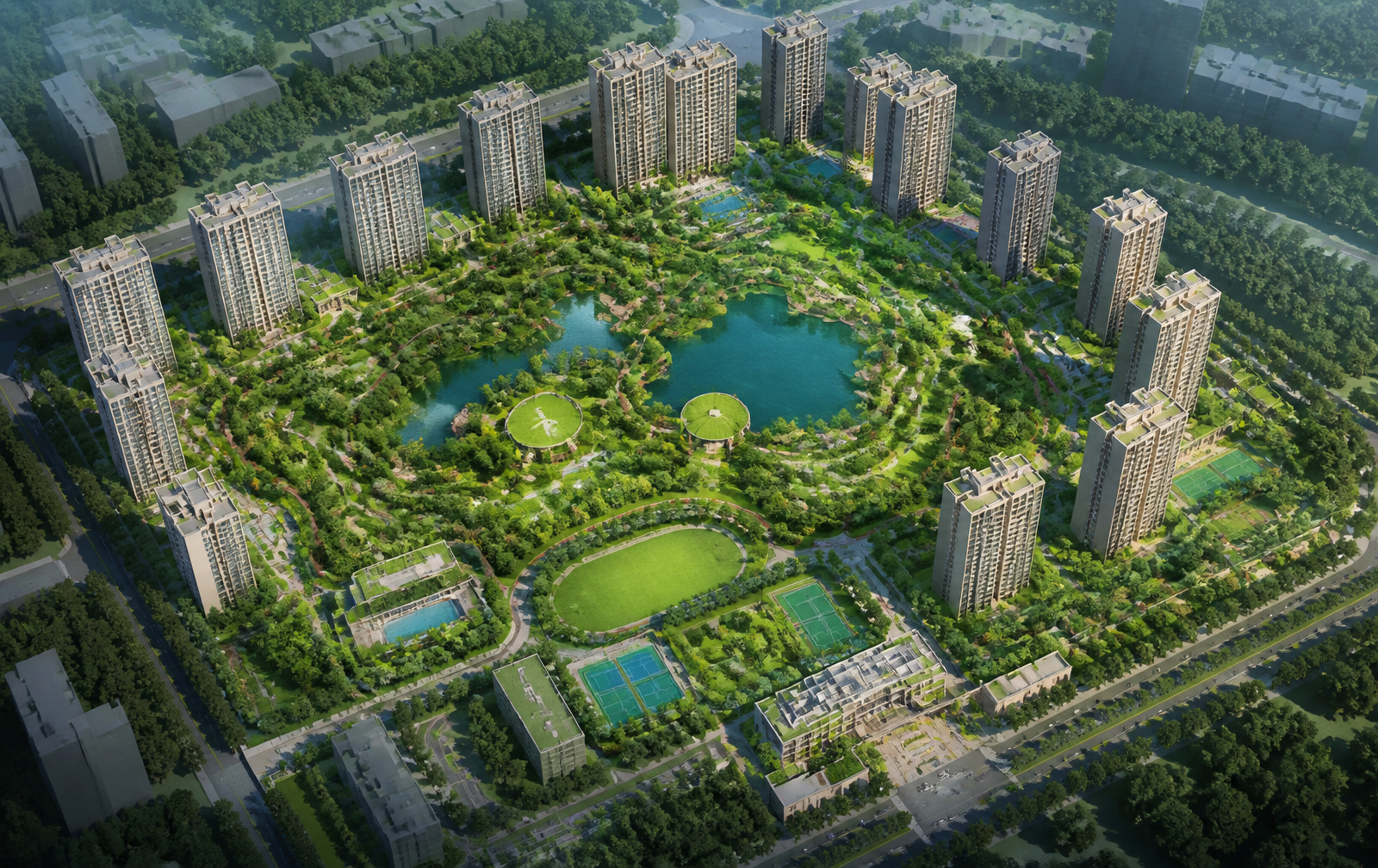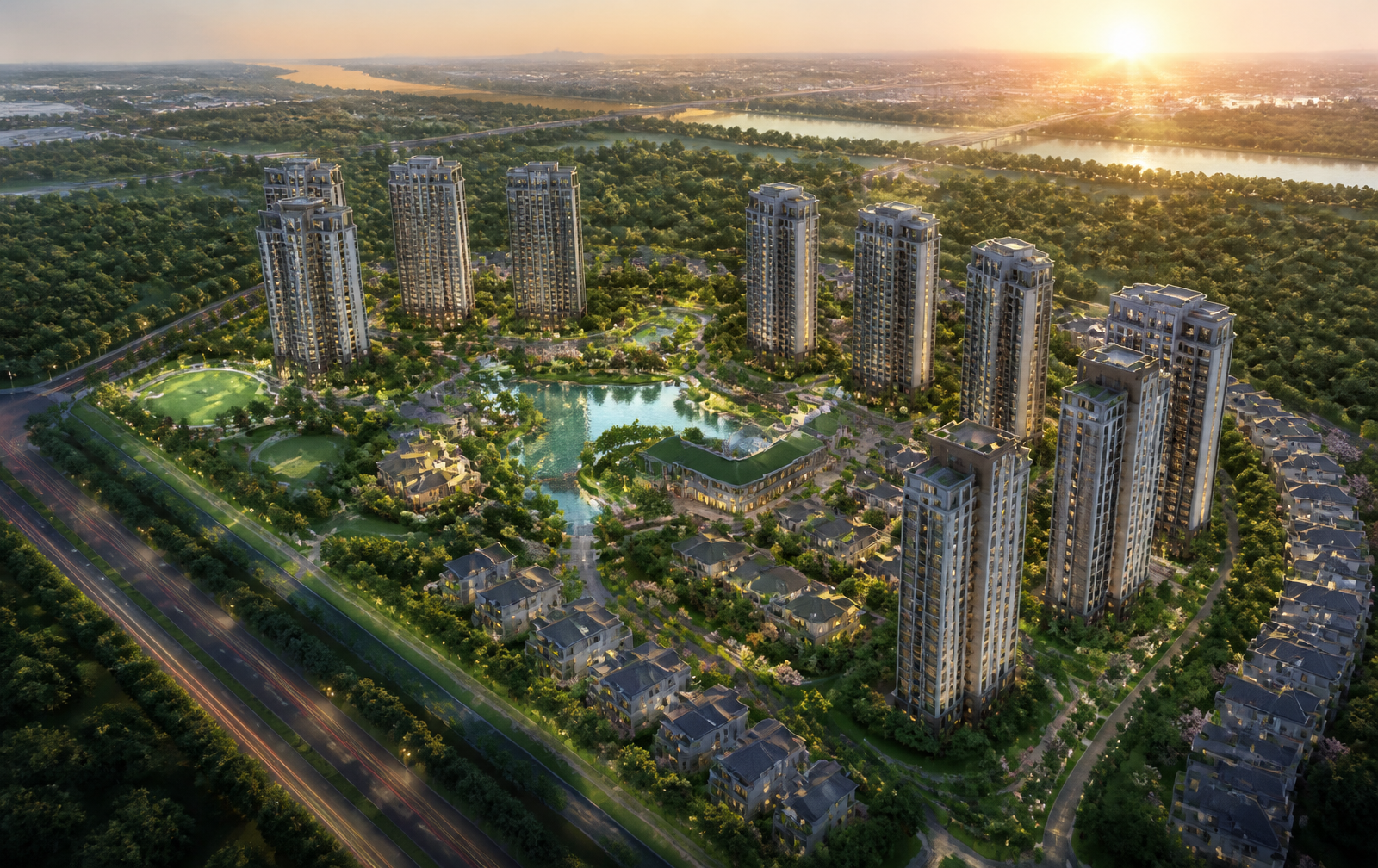
Delhi NCR's luxury real estate segment has entered its most decisive phase in a generation. Between 2022 and 2026, the ₹5 crore-plus residential band has moved from a niche of the top developers' portfolios to the primary engine of new launches, gross booking value and margin. Branded residences — a product that barely existed in the region five years ago — now account for a meaningful and rising share of that band. This report sets out what is driving the shift, corridor by corridor, with the numbers, the buyer behaviour and the forward-looking risks a serious buyer or investor should know.
§State of the market: numbers first
Every consultancy tracking Delhi NCR — Knight Frank, JLL, Anarock, CBRE, Cushman & Wakefield — has converged on a similar reading of 2023–2026: the ultra-luxury band is expanding faster than the broader residential market, and Delhi NCR is capturing a disproportionate share of that expansion nationally. Absolute volumes are still smaller than Mumbai's; velocity is higher.
§The four forces pushing the market
1. Infrastructure — the single biggest driver
No other factor is reshaping Delhi NCR's luxury map as fast as infrastructure. The Dwarka Expressway (formally operational end-to-end from 2024) has unlocked a north-Gurgaon corridor that was speculative land three years ago. Noida International Airport at Jewar (phased opening from 2026) is doing for Noida what IGI did for South Delhi in the 1990s. The Delhi-Meerut RRTS and Rapid Metro extensions are compressing commute times to a point where luxury buyers are willing to consider corridors they previously dismissed.
| Project | Status | Corridor benefit | Price impact seen |
|---|---|---|---|
| Dwarka Expressway | Fully operational 2024 | New Gurgaon (Sec 79–113) | +35–55% land value since 2022 |
| Noida International Airport (Jewar) | Phase 1 opening 2026 | Noida Expressway, Yamuna Expressway | +25–40% within 25 km |
| Delhi-Meerut RRTS | Phased operational | Ghaziabad, East Delhi | +15–25% at station catchments |
| GCE Road widening / signal-free | Ongoing | Sec 58–65 Gurgaon | +20–30% since 2022 |
| Sohna Elevated Road | Operational 2023 | Sohna Road, southern Gurgaon | +18–28% land value |
| Delhi Metro Silver Line (Aerocity–Tughlaqabad) | Under construction | South Delhi, Aerocity | Priced in progressively |
2. Wealth creation and the HNI/UHNI pool
India's ultra-high-net-worth pool (households with US$30M+) grew roughly 6% CAGR over 2020–2025 per Knight Frank's Wealth Report. Delhi NCR remains the second-largest UHNI concentration in the country after Mumbai and is the fastest-growing on a percentage basis. The unlock story — startup exits, family-office professionalisation, listed-company promoter secondaries — is putting fresh capital into a very narrow product band. Branded residences, with their combination of trophy asset and semi-institutional service layer, absorb that capital cleanly.
3. The NRI bid
Rupee depreciation, a favourable US and Gulf employment cycle, and easier remote-transaction infrastructure (POA, digital KYC, dedicated NRI desks) have re-activated the NRI buyer segment. Consultancy data from 2024–2026 puts NRI participation in Delhi NCR luxury launches at 20–30%, materially higher than the 10–15% seen through the late 2010s. This buyer values the branded product disproportionately because remote management is a headline requirement, not a nice-to-have.
4. Flight to quality
Post-RERA, post-COVID, and after two visible mid-market delivery crises in Delhi NCR (2018–2020), high-net-worth buyers have consolidated into fewer, larger, higher-quality assets. Branded schemes benefit disproportionately because they offer an assurance of standards that reduces perceived risk. This is showing up in absorption rates: top-tier branded launches in 2024–2026 (Three Sixty North, Trump, Tonino Lamborghini, M3M–Elie Saab) have booked out inventory within one to three quarters of launch — a pace not seen in the region since 2011.
§Corridor-by-corridor read
Golf Course Road — the incumbent
Golf Course Road remains the deepest luxury secondary market in Delhi NCR. DLF Camellias continues to set the price ceiling, trading in the ₹1.5–2.5 lakh psf band on resale for the top floors. The corridor is now supply-constrained — no meaningful new land is available — which is supporting rents and sustaining a 6–10% annual appreciation range through 2026. Branded stock here is scarce and commands the highest premium in the region.
Golf Course Extension Road — the new incumbent
Golf Course Extension Road (Sectors 58–65) has emerged as the corridor of choice for new branded launches. Three Sixty North (Oberoi Realty), Trump Residences (Tribeca / Smartworld), and Tonino Lamborghini Residences are all on or immediately off this stretch. Infrastructure upgrades and hospital / school density have compressed the historical discount to Golf Course Road from ~35% to ~15–20%. Expect continued convergence through 2027.
Dwarka Expressway — the growth story
The Dwarka Expressway corridor (Sectors 79–113) is the most dynamic in the region. The Westin Residences Gurugram (Sector 103), M3M Elie Saab Residences (Sector 111) and several unbranded ultra-luxury schemes have anchored branded product in a corridor that was raw land in 2019. Entry pricing sits at ₹40,000–65,000 psf; the near-term thesis is corridor appreciation more than brand premium recovery.
Noida — the second engine
Noida has moved from Delhi NCR's third-tier luxury story to a genuine second engine over 2023–2026. Sector 94 (Supernova, ATS Pious Hideaways), Sector 150 (multiple ultra-luxury), and — critically — Sector 97 and 98 with branded launches (M3M Jacob & Co, Smartworld Elie Saab) have redefined pricing. Jewar Airport is the single largest tailwind. Expect the fastest percentage appreciation in Delhi NCR to come from Noida between 2026 and 2029.
Delhi — Lutyens, South Delhi, and the capital-preservation trade
Delhi proper — Lutyens bungalows, Golf Links, Vasant Vihar, Anand Niketan — remains the most exclusive but least dynamic corridor. Yields are the lowest in the region (0.8–1.5%); price growth is steady but slow; branded product is essentially absent because land parcels are too small and heritage-controlled. Buyers here are not optimising for return; they are optimising for capital preservation and social capital.
| Corridor | Entry psf | Ceiling psf | 5-yr outlook | Branded density |
|---|---|---|---|---|
| Golf Course Road | ₹75,000 | ₹2,50,000+ | Moderate, supply-limited | Low but ultra-premium |
| Golf Course Extension Road | ₹55,000 | ₹1,20,000 | Strong, brand-led | High and rising |
| Dwarka Expressway | ₹40,000 | ₹75,000 | High, infra-driven | Rising |
| Southern Peripheral Road | ₹35,000 | ₹60,000 | High, infra-driven | Emerging |
| Sector 150 / 94, Noida | ₹35,000 | ₹65,000 | High, airport-driven | Rising |
| Sector 97/98, Noida | ₹30,000 | ₹55,000 | Very high, airport + brand | New but marquee |
| Lutyens / South Delhi | ₹80,000 | ₹4,00,000+ (bungalow) | Moderate, scarcity-driven | Effectively nil |
§The 2026–2028 supply pipeline
Publicly-announced branded projects in Delhi NCR now total more than 20, at various construction stages. Roughly half are on Golf Course Extension Road and Dwarka Expressway in Gurgaon; the balance is split between Noida sectors 94–150 and a handful of Delhi micro-locations. The pipeline is deep enough to double the region's total branded inventory by 2029. Two consequences follow: (1) buyers waiting 12–18 months will have materially more choice, particularly at the ₹8–15 crore ticket size; (2) the marginal branded launch will need to work harder to justify its premium, which will improve product quality but compress ranges.
§How buyer behaviour has changed
- Diligence depth: buyers are asking for operating agreements, RERA filings and brand exit clauses before commitment, not after — a shift from 2019.
- Ticket size upshift: median transaction ticket in tracked branded schemes has moved from ₹6.5 cr (2022) to ₹11 cr (2026).
- Second-home motive: 25–30% of 2026 buyers surveyed cite part-time use plus wealth-preservation, not primary residence.
- Rental thesis: 15–20% cite short-let / operator rental programme as a decision factor — up from under 5% in 2020.
- NRI bid: sustained at 20–30% of primary sales; concentrated in Gulf and North American nationalities.
§What to watch — five risks that could reshape the read
- Delivery discipline: a large branded scheme missing its handover by 18+ months would puncture the flight-to-quality premium region-wide.
- Interest rates: the last leg of the rally has been supported by benign rates. A 150 bps upshock would slow ultra-luxury absorption by 20–30%.
- NRI reversal: a sharp INR strengthening (below ~₹75/USD) would meaningfully reduce the NRI bid.
- Regulatory: any move to tighten short-let regulations, or to formalise operator taxation, would reprice the rental thesis.
- Brand fatigue: too many mid-tier brands launching in the same corridor would compress premium faster than expected.
§Outlook to 2028
Base case: 8–12% CAGR on top-tier branded stock in prime corridors, 12–18% CAGR on emerging-corridor branded launches on an infrastructure catch-up basis. Bull case (rate cuts + sustained NRI bid + accelerated Jewar impact): 15%+ across the board for two to three years, then normalisation. Bear case (rate shock + delivery slip): flat to –10% on emerging corridors, resilient on prime.