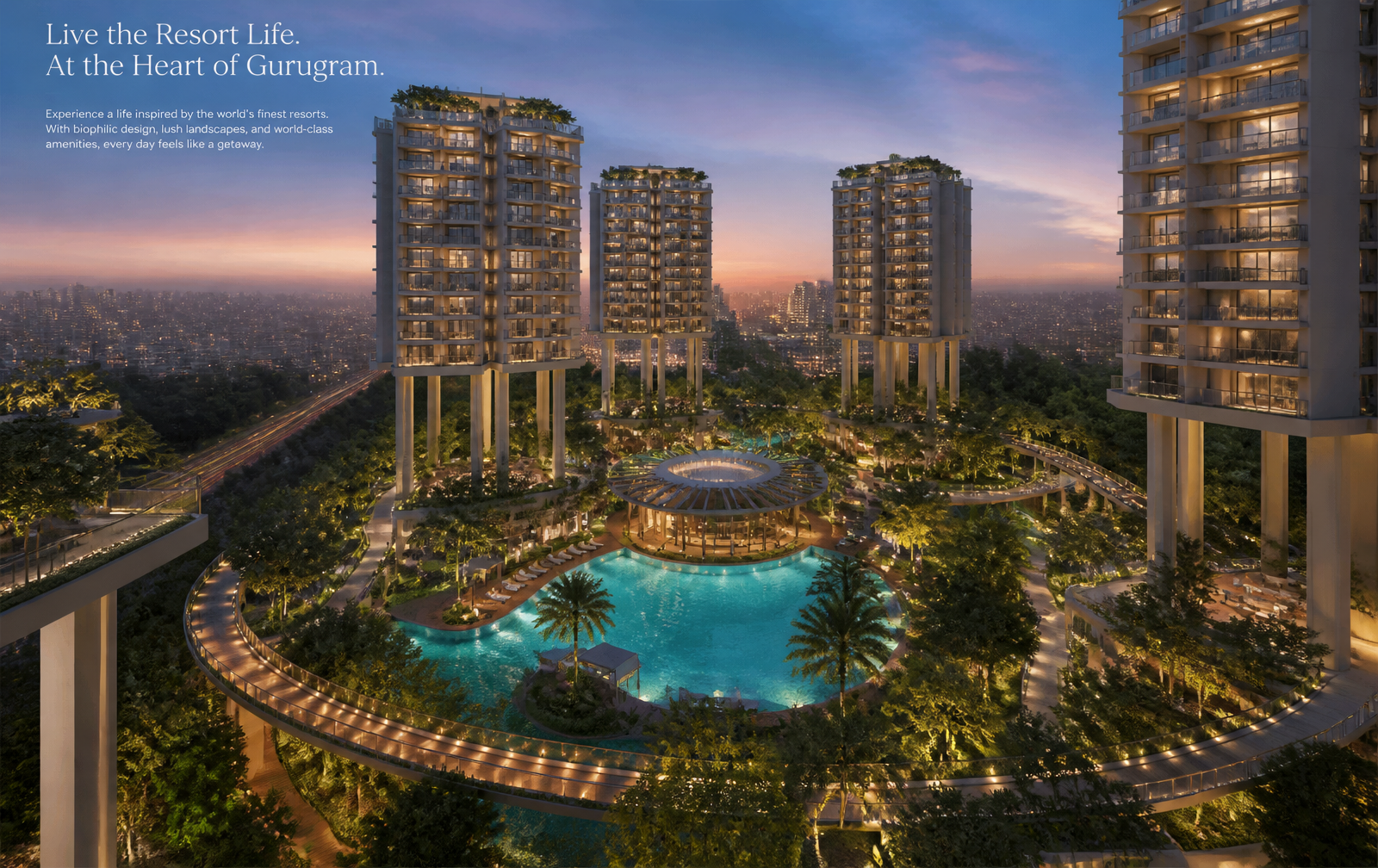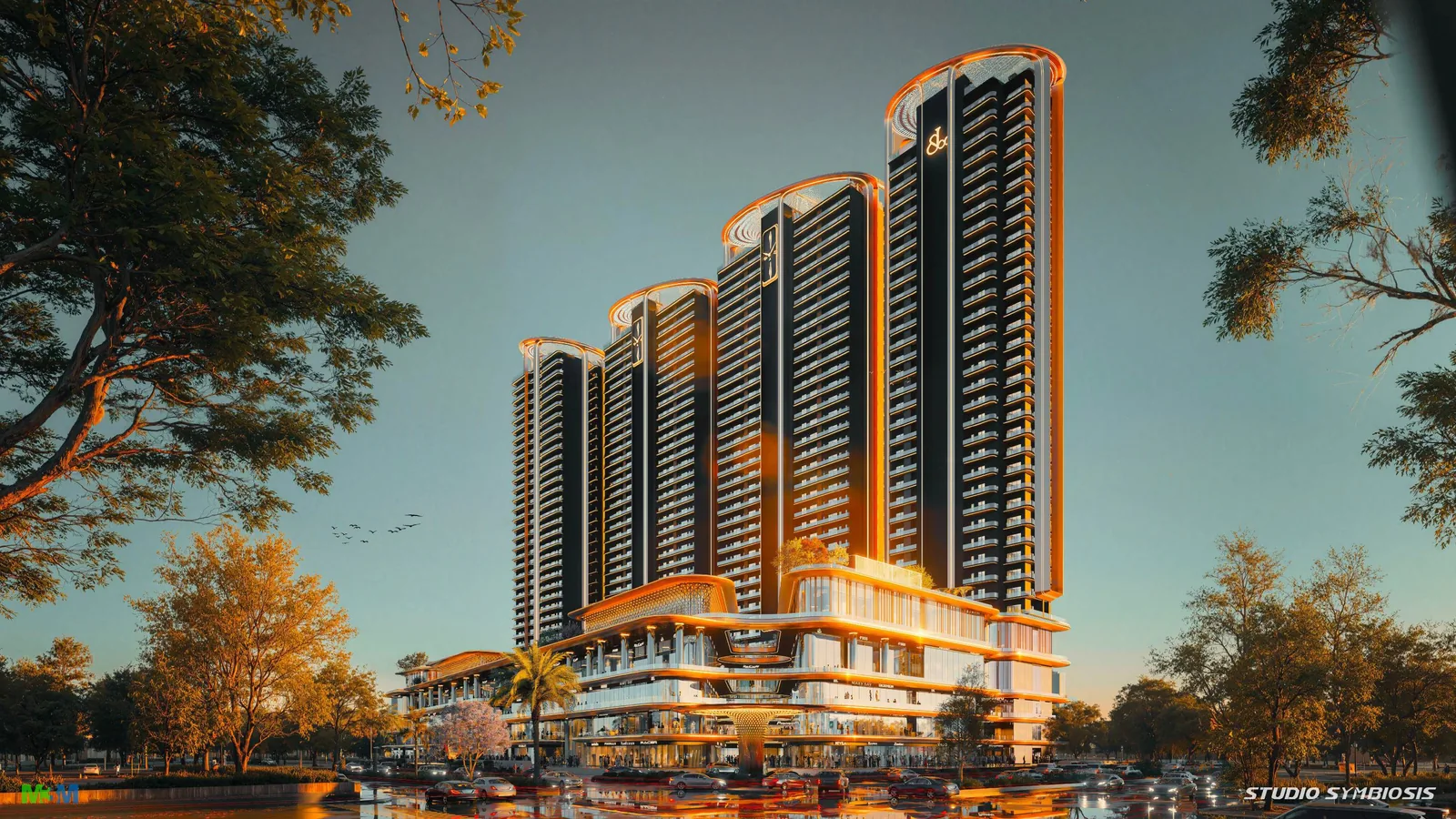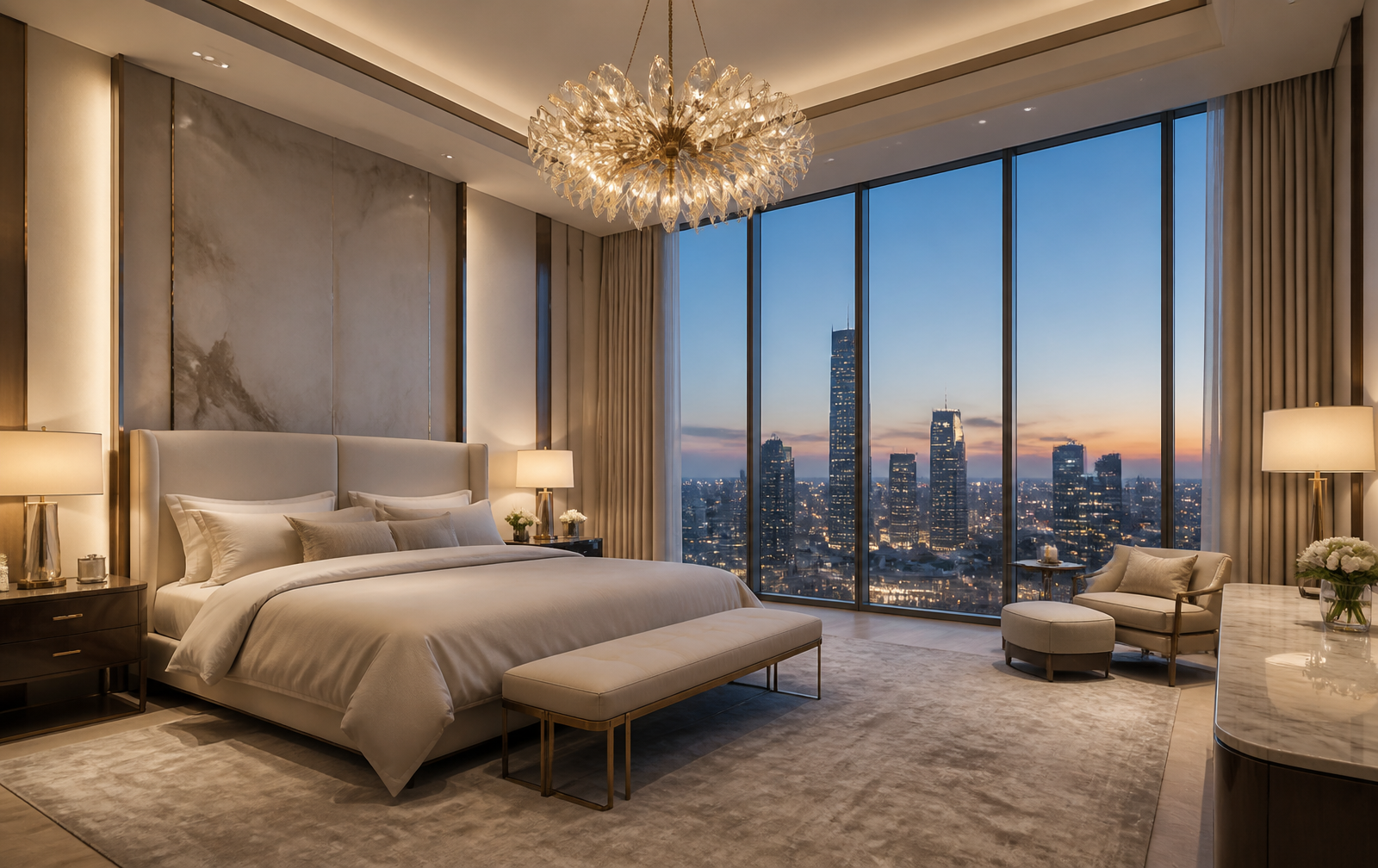
A hotel residence — sometimes called a hotel condominium, condo-hotel or resort residence — is a for-sale unit that sits inside the operating envelope of a working hotel. A branded residence is a for-sale home operated to a brand standard but with a residential-first orientation. Both share the same hospitality DNA. Both are marketed side by side. And the distinction between them decides everything from how many days you can occupy your own home to how the rental income is taxed. Understanding the line is the mark of a serious buyer.
This guide sets out the difference, using the Delhi NCR shortlist as the reference frame. It is written for buyers who are evaluating any project marketed with a hospitality brand's name on the door, and who want to be certain about what they are actually buying — a residence, a hotel unit, or the hybrid in between.
§Two definitions
In practical terms: in a branded residence the owner is the primary user, and the brand serves the owner. In a hotel residence the hotel is the primary user, and the owner is a hospitality investor who happens to hold the keys.
§Where the difference actually lives — the operating agreement
You cannot tell the two categories apart from the marketing brochure or from a walk through the building. You can tell them apart from the operating agreement. A branded-residence operating agreement is a service contract — it defines what services owners collectively fund, how the brand audits them and how the operator is appointed and removed. A hotel-residence operating agreement is a rental-pool or restricted-use contract — it defines how many nights a year the owner may occupy the unit, how bookings are prioritised, how revenue is split and how the unit is returned to the hotel inventory.
| Clause | Branded residence | Hotel residence |
|---|---|---|
| Personal use | Unrestricted, 365 days a year | Restricted, typically 30–90 nights |
| Booking priority | Owner has absolute priority | Hotel guest bookings may take priority in peak season |
| Rental participation | Owner's choice, no obligation | Mandatory rental-pool participation is common |
| Revenue split | Owner keeps 100% of any rent (net of management fee) | Typically 40–60% to owner, 40–60% to operator |
| Furnishing | Owner's choice within house rules | Operator-standard furniture package |
| Access to hotel amenities | Not applicable — residence has its own amenity floor | Included, but subject to hotel operating hours |
| Exit / sale | Free market resale | Subject to right of first refusal in some structures |
| Personal storage of belongings | Full — the unit is the owner's home | Restricted or in a dedicated owner's locker |
§Financing, tax and reporting
Indian lenders treat a branded residence as a home for the purposes of a home loan. Standard eligibility criteria apply, standard LTVs of 70–80%, and the interest is tax-deductible under Section 24 subject to the usual caps. A hotel residence is treated closer to commercial real estate — the LTV is lower (usually 55–65%), the interest rate is higher, and the loan is underwritten against the hotel's projected performance rather than the borrower's residential-income capacity. NRIs face additional scrutiny on hotel-residence financing because the underlying revenue is business income repatriable under different FEMA rules.
Tax treatment splits along the same line. Rental income from a branded residence is 'income from house property' and enjoys the 30% standard deduction plus interest deductibility. Revenue from a hotel residence, when it comes through a rental pool, is often treated as business income with GST implications and no standard deduction. Capital-gains treatment is broadly similar for both — long-term gains at 20% with indexation, subject to holding period — but the record-keeping burden differs materially.
§How the buildings are actually designed differently
The physical building tells you which category is dominant. A branded residence is designed as a residential tower with a hospitality service layer — the amenity floor is residents-only, the lobby is quiet and private, the ceilings and floor plates are residential in scale, storage is generous, kitchens are full-scale, and back-of-house logistics prioritise resident convenience over hotel throughput. A hotel residence sits inside or adjacent to a working hotel — the lobby is shared with hotel guests (or accessed through a separate 'residence' entrance that still crosses hotel circulation), amenity is shared, kitchens are often smaller or kitchenette-scale, storage is minimal, and the back-of-house is optimised for hotel housekeeping cycles.
§How resale works
A branded residence resells into a home-buyer market. The comparable is another premium or branded home; the buyer is an end-user or an investor buying for long-hold. Pricing reference is per-square-foot capital value. A hotel residence resells into a hospitality-investor market. The comparable is another income-generating hospitality asset; the buyer is an investor pricing off yield. Pricing reference is capitalisation rate — the expected rental yield determines the asking price, not just per-square-foot. When hotel occupancy dips, hotel-residence prices dip with it; branded-residence prices are decoupled from hotel performance because the residence has its own economics.
§The Delhi NCR reading
Almost all marquee for-sale hospitality-brand projects in Delhi NCR are branded residences, not hotel residences. The Ritz-Carlton Residences, St. Regis Residences (planned), Trump Residences Gurgaon, Tonino Lamborghini Residences Sector 71, M3M ELIE SAAB Residences Sector 111, The Westin Residences Gurugram Sector 103, Smartworld × ELIE SAAB Sector 98 Noida and M3M Jacob & Co. Sector 97 Noida are all residence-first products — you can occupy the unit 365 days a year and letting is optional. True hotel-residence products (mandatory rental pool, restricted personal use) are rare in India and concentrated in resort markets like Goa, Alibaug and the Himalayas rather than in NCR.
Where the distinction bites in NCR is in ancillary products marketed under hotel brands but structured as hotel residences — 'suite ownership' programmes, 'residential suite' inventories within a working hotel, and fractional programmes attached to the hotel operator. These are legitimate hospitality investments but they are not the same product as a Ritz-Carlton Residence or a Trump Residence, and they should not be evaluated on the same basis.
- +Branded residence — unrestricted personal use
- +Branded residence — full home-loan eligibility
- +Branded residence — resells to a wider buyer pool
- +Hotel residence — rental income without operational effort
- +Hotel residence — access to full hotel amenities as an owner
- +Hotel residence — hospitality-grade housekeeping bundled
- –Branded residence — you are responsible for letting the unit if you want income
- –Branded residence — service charge is due whether or not you occupy
- –Hotel residence — restricted personal use windows
- –Hotel residence — rental split favours the operator in most contracts
- –Hotel residence — resale is illiquid and priced off cap rate, not per sq ft
- –Hotel residence — commercial-real-estate financing terms, not home loan
§How to decide which one you are looking at
- Read the operating agreement, not the brochure. The rules on personal use, rental participation and revenue split tell you the category in three clauses.
- Ask how the developer will finance the project. Hotel residences are typically part of a hotel debt structure; branded residences finance as residential.
- Check who owns the amenity floor. In a branded residence, owners own it collectively. In a hotel residence, the hotel operator owns it and licenses use.
- Look at the kitchen. Full-scale kitchens with pantry storage almost always indicate a branded residence. Kitchenettes with induction hobs indicate a hotel residence.
- Ask the sales team how the unit is furnished. 'You choose' is a branded residence; 'operator-standard package' is a hotel residence.
- Follow the loan. If the mortgage product on offer is a home loan at residential rates, it is a branded residence. If it is a commercial or LRD-linked product, it is a hotel residence.